When to Use a Small Model vs a Frontier Model: A Practical Decision Tree
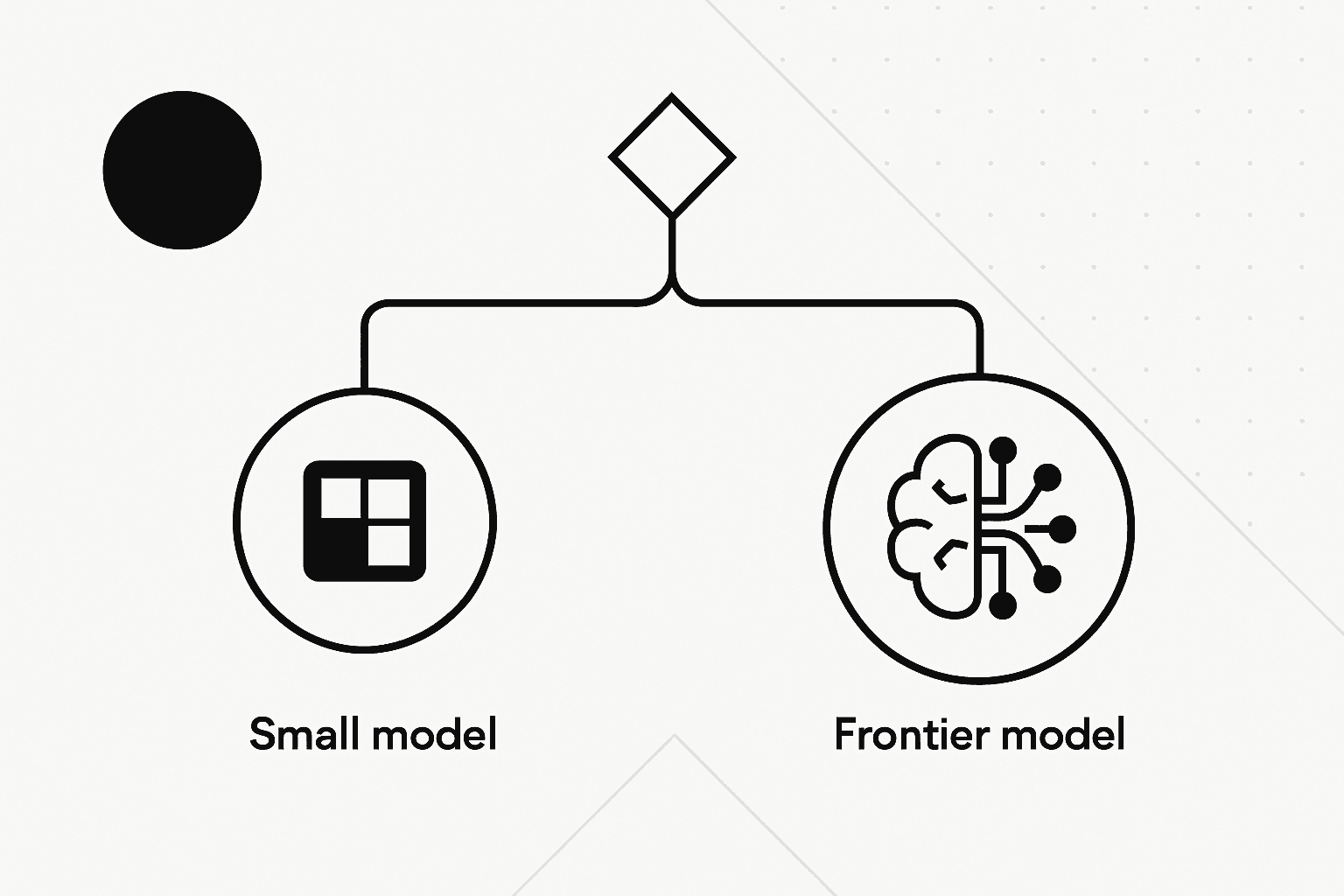
In the rapidly evolving landscape of AI development, choosing between a small model and a frontier model can feel like attempting to navigate a maze. Each path has its benefits and drawbacks, and the right choice depends on the specific needs and goals of your project. Let's walk through the practical considerations that guide this essential decision.
Understanding Your Needs
First, clarify your project's specific requirements. Small models are typically less resource-intensive and can be more straightforward to deploy. If your application requires rapid processing times and doesn't demand high complexity, a small model may be sufficient. On the other hand, frontier models—which represent cutting-edge advancements in AI—are designed for tasks that require state-of-the-art precision and complex problem-solving abilities. These models are adept at handling more nuanced data and delivering higher accuracy but come with greater computational and operational costs.
Evaluating Resource Constraints
One of the principal factors in this decision is resource availability. Small models often require fewer computational resources, making them a wise choice when working within limited infrastructure. They are also beneficial when you need to maintain cost-efficiency for large-scale deployment across multiple nodes or edge devices. Frontier models, while more powerful, usually necessitate extensive computational resources, including powerful GPUs or TPUs, and can significantly inflate operational costs. Consider your project's budget, energy constraints, and available hardware when making your decision.
Assessing Scalability and Flexibility Needs
Small models shine when scalability is crucial, allowing you to easily adjust and adapt your AI system as needs shift. Their lightweight nature facilitates updates and fast iteration. If your project is dynamic and requires frequent changes or improvements, this quality can be invaluable. Frontier models, conversely, offer limited flexibility due to their complexity but can provide significant long-term potential for innovation in tasks involving complex data sets, such as natural language processing and image analysis, when performance is prioritized over adaptability.
Closing Thoughts
Ultimately, choosing between a small model and a frontier model is about aligning your system's capabilities with your organization's aims. Smaller models offer efficiency, ease of use, and cost-effectiveness, whereas frontier models offer power and precision when performance is paramount. We encourage you to reach out to us if you need guidance on assessing your project's requirements and exploring the best AI solutions that fit your needs. At AIoverflow, we specialize in a thoughtful approach to AI development, ensuring you get the most out of your technology investments.